
Dance is much more than a fun activity for children. It is a creative form of movement that helps kids stay physically active while developing important mental, emotional, social, and communication skills. Whether a child learns Western dance, Kathak, contemporary, hip-hop, or another dance form, regular practice can contribute positively to their overall development.
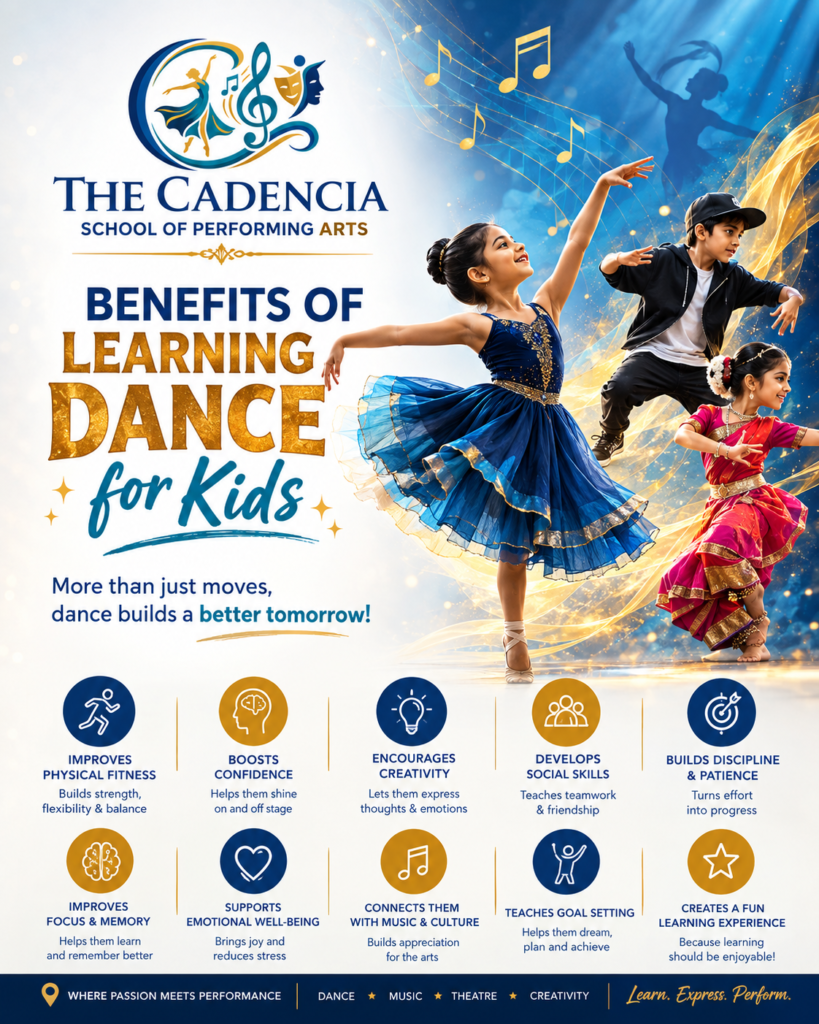
In today’s digital world, children often spend considerable time using smartphones, tablets, computers, and televisions. Introducing dance into their routine gives them an enjoyable way to move, express themselves, interact with others, and build healthy habits. Dance classes can also provide children with a structured environment where they can learn discipline, patience, teamwork, and confidence.
Here are some of the most important benefits of learning dance for kids.
1. Improves Physical Fitness

One of the biggest benefits of dance for children is improved physical fitness. Dancing involves continuous movement, which helps children develop strength, flexibility, balance, coordination, and stamina.
Different dance movements require children to use various muscle groups. Jumping, stretching, turning, balancing, and moving to different rhythms can gradually improve their physical abilities. Regular dance practice can also encourage children to remain active instead of spending excessive time sitting indoors.
For growing children, developing good movement habits at an early age can support an active and healthy lifestyle.
2. Develops Coordination and Balance
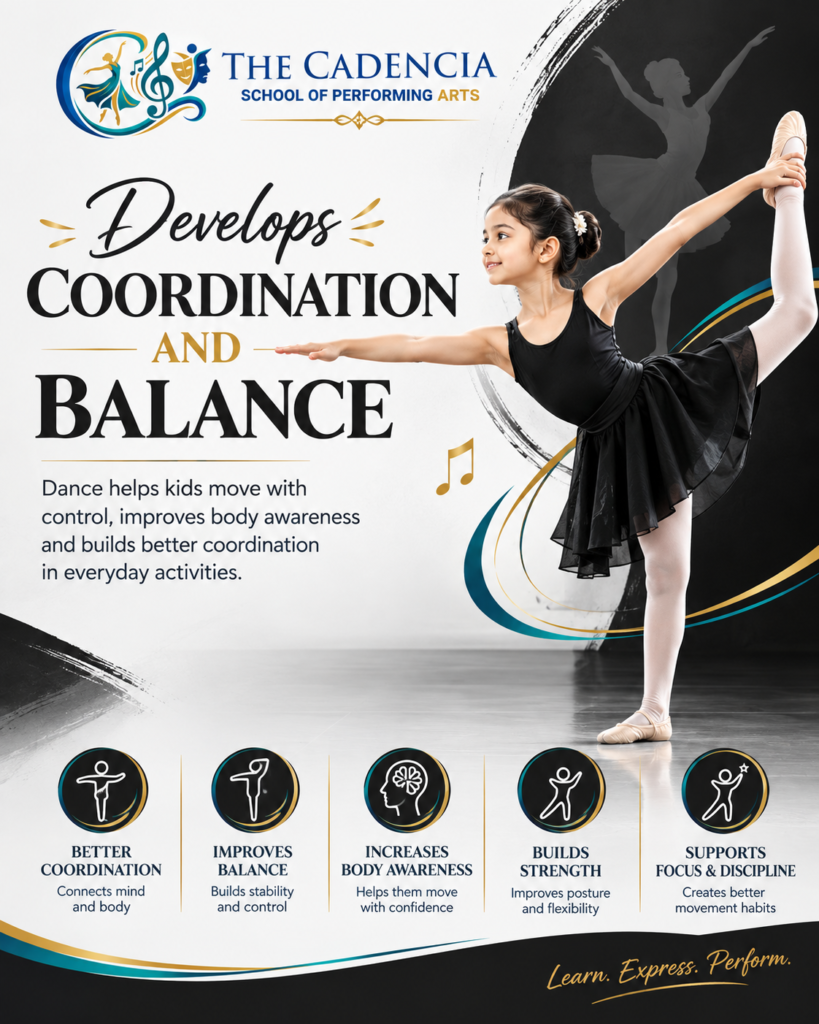
Dance requires children to coordinate their hands, legs, feet, body, and eyes while following music and instructions. Learning choreography helps them understand how different parts of their body work together.
For example, a simple dance sequence may require a child to move their arms while stepping in a particular direction and maintaining the rhythm of the music. With regular practice, these movements become easier and more controlled.
Improved coordination and balance can also be useful in other physical activities and sports.
3. Builds Confidence
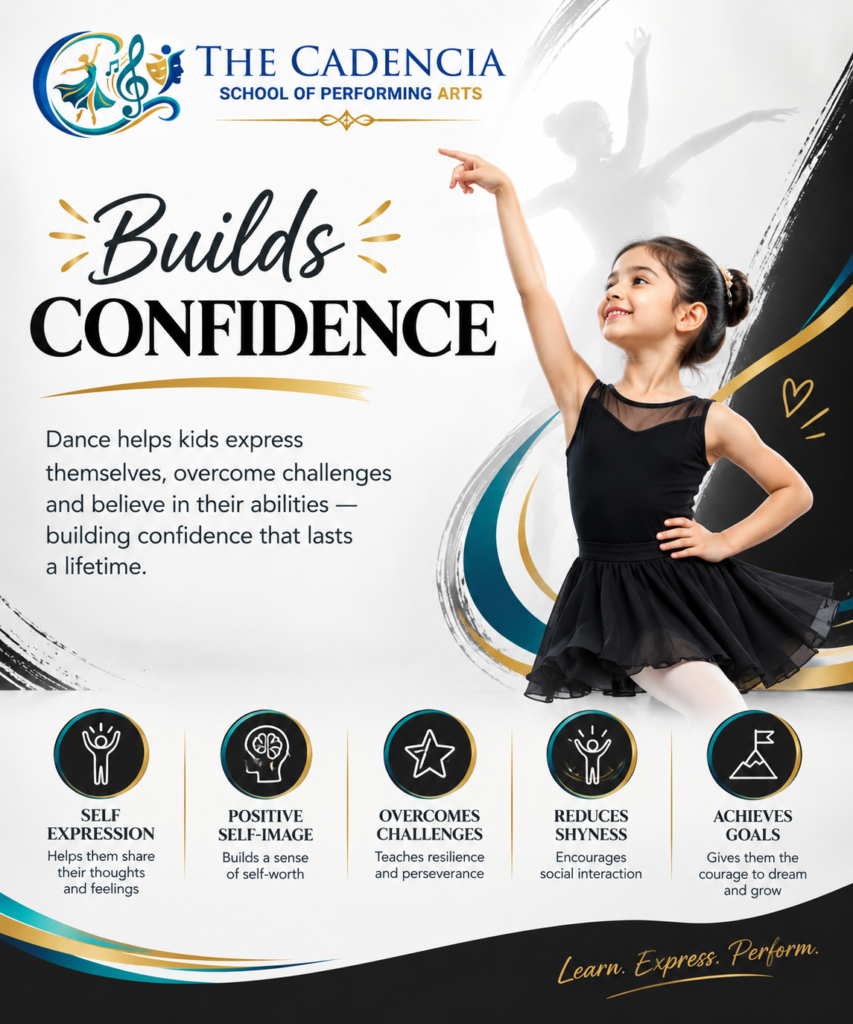
Many children feel nervous when they have to perform in front of others. Dance classes can gradually help them overcome this hesitation.
As children learn new movements and successfully complete dance routines, they begin to feel more confident about their abilities. Performing in front of classmates, teachers, parents, or an audience can further strengthen their self-confidence.
Even small achievements, such as learning a difficult step or completing an entire routine, can give children a sense of accomplishment.
4. Encourages Self-Expression
Children do not always have the words to explain what they are feeling. Dance gives them another way to express emotions, ideas, and creativity.
Through body movements, facial expressions, rhythm, and performance, children can communicate feelings in a natural and enjoyable way. Different styles of dance also allow children to explore different forms of expression.
This creative freedom can help children become more comfortable expressing themselves rather than being afraid of making mistakes.
5. Improves Discipline and Patience
Learning dance requires regular practice. Children may not learn a complete routine in one or two classes. They need to repeat movements, listen carefully to instructions, correct mistakes, and continue practicing.
This process teaches an important lesson: improvement takes time.
Dance classes can therefore help children develop patience and discipline. They learn that making mistakes is a normal part of learning and that consistent effort can lead to better results.
These habits can be useful not only in dance but also in academics and other areas of life.
6. Develops Memory and Concentration
Remembering dance steps requires concentration and memory. Children need to remember sequences, directions, timing, formations, and changes in movement.
When they practice choreography regularly, they learn to pay attention to details and recall information in the correct order.
This can encourage children to develop better concentration skills. They also learn to listen carefully to their instructor and respond to musical cues.
7. Teaches Teamwork
Many dance performances involve groups rather than individual dancers. Children need to work together to perform a routine successfully.
They learn how to maintain their position, match their movements with others, follow timing, and support their classmates. This teaches cooperation and teamwork.
Group dance activities can also help children develop social skills and become more comfortable interacting with other children.
8. Encourages Creativity
Dance is a creative art form. Children can explore movement, rhythm, music, expressions, and choreography.
Once children understand the basic techniques, they can gradually experiment with their own movements. Some instructors may also give children opportunities to create short sequences or improvise.
Encouraging creativity at an early age can help children become more open-minded and confident when approaching new ideas.
9. Helps Develop Social Skills
Dance classes give children an opportunity to meet and interact with other kids who share similar interests.
They learn how to communicate with classmates, listen to teachers, cooperate during activities, and participate in group performances.
For shy children, a supportive dance environment can provide opportunities to make friends and gradually become more comfortable in social situations.
10. Supports Emotional Well-Being
Physical activity and creative expression can be positive ways for children to manage everyday emotions and energy.
Dance allows children to move, play, listen to music, and express themselves in an enjoyable environment. A regular class can also provide a healthy break from academic routines and screen-based activities.
The enjoyment children experience while dancing can contribute to a positive attitude toward physical activity and creative learning.
11. Improves Posture and Body Awareness
Dance teaches children to understand how they position and move their bodies. Depending on the dance style, instructors may focus on posture, alignment, controlled movements, and balance.
Over time, children can become more aware of their body position while standing, walking, sitting, and performing movements.
This increased body awareness can help them develop better movement habits.
12. Introduces Children to Music and Rhythm
Dance and music are closely connected. Children learn to listen to beats, rhythms, tempo, and changes in music while performing movements.
This helps them develop an understanding of musical timing. They learn when to start a movement, when to pause, and how to match their actions with the rhythm.
Exposure to different types of music can also broaden a child’s appreciation for different cultures and artistic traditions.
13. Develops a Growth Mindset
Dance naturally involves challenges. A child may struggle with a particular step initially, but after repeated practice, they may eventually master it.
This teaches children that ability can improve through effort and practice.
Instead of thinking, “I cannot do this,” children can learn to think, “I cannot do this yet.”
This mindset can encourage them to approach challenges in other areas with greater persistence.
14. Provides a Healthy Alternative to Screen Time
Children today have easy access to entertainment through phones, tablets, televisions, and gaming devices. While technology can be useful, excessive screen time can reduce opportunities for physical activity and face-to-face interaction.
Dance classes provide a structured alternative that combines movement, music, creativity, and social interaction.
Instead of simply consuming entertainment, children actively participate in an activity and develop new skills.
15. Teaches Goal Setting
Dance provides children with clear and achievable goals. They may begin by learning basic steps and gradually move toward more advanced combinations and performances.
For example, a child may set a goal to learn a particular routine, improve flexibility, perform confidently on stage, or master a challenging movement.
Working toward these goals can teach children how to break a larger challenge into smaller steps and celebrate progress along the way.
16. Encourages Cultural Awareness
Different dance forms have their own history, traditions, music, costumes, and cultural significance.
When children learn traditional dance forms such as Kathak, they can gain an introduction to Indian cultural heritage. Learning international styles can also expose them to different musical and artistic traditions.
This makes dance not only a physical activity but also a form of cultural and artistic education.
17. Helps Children Become More Comfortable Performing
Stage performances can initially feel intimidating for children. Regular dance training gives them opportunities to practice performing in a supportive environment.
Participating in annual functions, competitions, showcases, or school events can gradually make children more comfortable in front of an audience.
This experience can be valuable later when they need to give presentations, participate in public speaking activities, or take part in group events.
18. Builds a Sense of Achievement
Every new dance skill can become a small achievement for a child.
Learning a difficult movement, remembering an entire routine, performing without assistance, or participating in a stage performance can give children a strong sense of accomplishment.
Recognizing these achievements can motivate children to keep learning and trying new things.
19. Encourages Healthy Habits
When children enjoy being physically active from an early age, they may be more likely to continue participating in physical activities as they grow.
Dance can help establish a positive relationship with exercise because children often experience it as enjoyable rather than as a chore.
Regular movement, combined with adequate rest and healthy nutrition, can contribute to an active lifestyle.
20. Creates a Fun Learning Experience
Perhaps one of the most important benefits of dance is that children can learn while having fun.
A good dance class combines movement, music, creativity, interaction, and learning. Children can develop physical and personal skills without feeling like they are sitting through another academic lesson.
The enjoyment associated with dance can encourage children to participate consistently and develop a long-term interest in the performing arts.
How Parents Can Choose the Right Dance Class for Their Child
Parents should consider several factors when selecting a dance class. The instructor should understand how to work with children and create a positive, encouraging learning environment.
The class should also be appropriate for the child’s age and current ability. Beginners should not be pressured to perform advanced movements before they have developed the necessary basic skills.
Parents can also consider the dance style their child enjoys. Some children may prefer energetic Western or hip-hop dance, while others may enjoy classical forms such as Kathak.
Class size, practice schedule, safety, instructor experience, and the overall learning environment are also important considerations.
Most importantly, children should enjoy attending the class. Dance should encourage learning, creativity, confidence, and physical activity rather than becoming a source of unnecessary pressure.
Conclusion
Learning dance can offer children much more than the ability to perform choreography. It can support physical fitness, coordination, confidence, creativity, concentration, discipline, teamwork, communication, and emotional expression.
Dance gives children an opportunity to stay active while exploring music and creativity. It also teaches valuable life lessons about patience, practice, perseverance, and overcoming challenges.
Whether a child is interested in Western dance, Kathak, contemporary, hip-hop, or another style, starting dance at an early age can provide a meaningful and enjoyable learning experience.
For parents looking for an activity that combines physical movement, creativity, confidence-building, social interaction, and skill development, dance can be an excellent choice. With the right instructor and a supportive environment, dance classes can become an important part of a child’s overall development and a skill they continue to enjoy for years to come.Dance is much more than a fun activity for children. It is a creative form of movement that helps kids stay physically active while developing important mental, emotional, social, and communication skills. Whether a child learns Western dance, Kathak, contemporary, hip-hop, or another dance form, regular practice can contribute positively to their overall development.
In today’s digital world, children often spend considerable time using smartphones, tablets, computers, and televisions. Introducing dance into their routine gives them an enjoyable way to move, express themselves, interact with others, and build healthy habits. Dance classes can also provide children with a structured environment where they can learn discipline, patience, teamwork, and confidence.
Here are some of the most important benefits of learning dance for kids.