
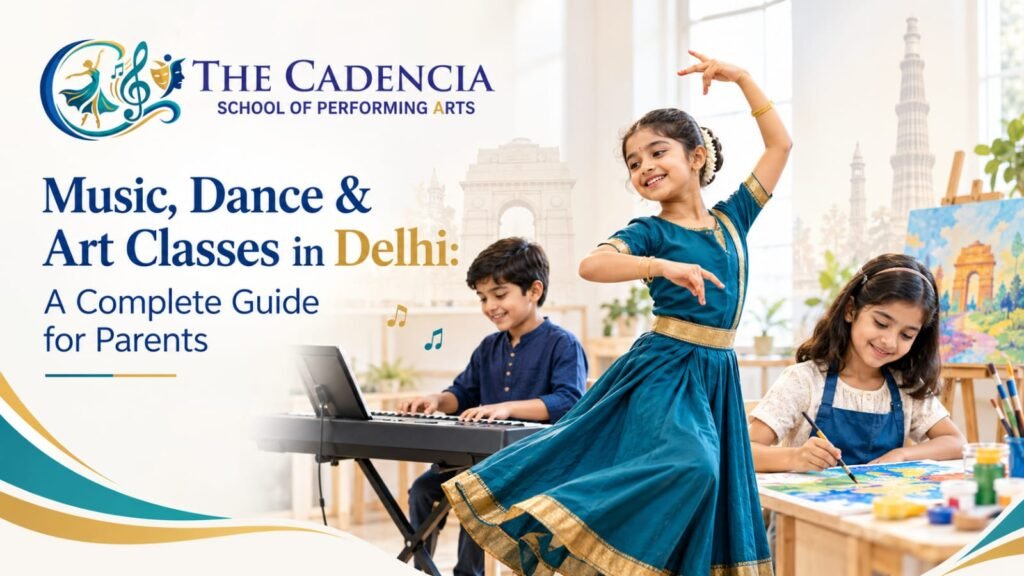
Choosing the right extracurricular activity for a child can be challenging for parents. With so many options available, it can be difficult to decide whether a child should learn music, dance, drawing, or another creative skill. The right activity can do more than keep children engaged after school. It can help them discover their interests, develop confidence, improve concentration, and learn how to express themselves.
For parents looking for Music, Dance & Art Classes in Delhi, the first step is understanding what each type of class offers and how to choose a program that matches the child’s age, interests, and learning style.
This guide explains what parents should consider before enrolling their child in music, dance, or art classes and how a structured performing arts environment can support a child’s overall development.
Why Should Children Join Music, Dance or Art Classes?
Children naturally learn through exploration and creativity. Activities such as playing an instrument, dancing, drawing, and painting give them opportunities to experiment, make decisions, and express ideas.
Unlike academic subjects, creative classes allow children to learn through practice and experience. They also encourage children to work on skills gradually instead of expecting immediate results.
Regular participation in creative activities can help children develop:
- Better coordination and body awareness
- Creativity and imagination
- Concentration and listening skills
- Confidence and self-expression
- Patience and discipline
- Communication and social skills
- Appreciation for music, movement, and visual arts
The most important point is that children should enjoy the activity. A class becomes more beneficial when a child looks forward to attending and feels comfortable learning.
Music Classes in Delhi: What Can Children Learn?
Music education can introduce children to rhythm, melody, instruments, and musical expression. Depending on their age and interest, children can explore different instruments or vocal training.
Common options include:
Vocal Music
Vocal training helps children understand pitch, rhythm, breathing, and musical expression. It can also improve listening skills because students learn to identify and reproduce different notes and patterns.
Guitar
Guitar is a popular choice for beginners. Children can gradually learn chords, basic techniques, rhythm patterns, and songs as they become more comfortable with the instrument.
For parents searching for Guitar Classes in Delhi, it is useful to check whether the program offers beginner-level training and whether the teaching approach is suitable for children.
Keyboard
Keyboard classes can introduce children to basic music theory, notes, rhythm, and coordination between both hands.
It can also provide a foundation for understanding musical concepts that may be useful when learning other instruments later.
Drums
Drum training focuses strongly on rhythm, timing, coordination, and concentration. Children who enjoy energetic activities may particularly enjoy learning percussion.
Tabla
Tabla provides an introduction to Indian percussion and rhythm. Students gradually learn hand techniques, rhythmic patterns, and traditional compositions.
Parents should choose a music class based on the child’s genuine interest rather than simply selecting the instrument that seems most popular.
Dance Classes in Delhi: More Than Just Movement
Dance combines physical movement with music, rhythm, coordination, and expression. It can be a particularly engaging activity for children who enjoy being active.
Different dance styles provide different experiences.
Western Dance
Western dance styles can help children explore rhythm, movement, coordination, and stage performance. Classes can also encourage children to become more comfortable performing in front of others.
Kathak
Kathak introduces children to Indian classical dance through rhythm, footwork, expressions, hand movements, spins, and storytelling.
For parents considering Kathak Classes in Delhi, it is important to find a structured program where children can learn the fundamentals gradually.
Dance for Different Age Groups
A good dance program should consider the age and ability of students. Younger children may benefit from shorter, engaging sessions focused on basic movement and rhythm, while older students can gradually work on technique, combinations, and performance.
Parents should not expect a young child to master advanced movements immediately. Consistent practice and age-appropriate teaching are more important.
Art Classes in Delhi: Encouraging Creativity
Art classes provide children with a different form of creative expression. Drawing, painting, sketching, and other visual activities encourage children to observe their surroundings and transform their ideas into visual forms.
Fine Arts Classes in Delhi can be particularly useful for children who enjoy drawing, colours, painting, or creative projects.
Art classes can help children develop:
- Fine motor skills
- Visual observation
- Creativity
- Patience
- Attention to detail
- Imagination
- Confidence in expressing ideas
One of the biggest advantages of art is that there is not always one “correct” answer. Children can explore different ways of creating something, which can encourage independent thinking.
How to Choose the Right Class for Your Child
The number of options available in Delhi can make choosing the right class confusing. Instead of choosing a class only because it is nearby or popular, parents should evaluate a few important factors.
1. Consider Your Child’s Interest
Start by observing what your child naturally enjoys.
Does your child constantly dance when music plays? Do they enjoy singing? Are they interested in drawing? Do they spend time exploring musical instruments?
These small observations can help you identify the activity they may enjoy.
2. Check the Age Group
A class designed for teenagers may not be appropriate for a five-year-old. Ask whether the school has separate batches or teaching methods for different age groups.
Age-appropriate teaching can make learning easier and more enjoyable.
3. Understand the Teaching Approach
Ask how instructors teach beginners. A good program should introduce concepts progressively instead of overwhelming students with advanced techniques.
Parents can also ask whether students receive individual guidance and corrections during class.
4. Look at Class Size
Class size can affect the amount of attention each student receives.
Smaller or well-managed groups can make it easier for instructors to observe students, identify mistakes, and provide feedback.
5. Ask About Class Frequency
Consistency is important when learning creative skills.
Before joining, ask how many classes take place each week and whether students are expected to practice at home.
A realistic schedule should fit comfortably around the child’s schoolwork and other commitments.
6. Consider the Learning Environment
A child’s comfort matters.
Visit the academy if possible and observe whether the environment is welcoming, organised, safe, and encouraging.
Children learn better when they are comfortable making mistakes and asking questions.
Should Parents Choose One Activity or Multiple Activities?
There is no universal answer.
Some children enjoy focusing deeply on one activity, while others enjoy exploring multiple creative areas.
For example, a child interested in music may start with keyboard and later explore vocal training. Another child may enjoy both dance and fine arts.
Parents should avoid filling the child’s schedule with too many classes. Children also need time for schoolwork, rest, outdoor play, family activities, and free play.
The goal should be balanced development rather than a crowded timetable.
What Age Should Children Start Music, Dance or Art Classes?
There is no single perfect age for every child.
Younger children can often begin with introductory creative activities designed around exploration and enjoyment. As they grow older, they can move toward more structured training.
For children around four to six years old, classes should generally focus on basic movement, rhythm, creativity, and enjoyment.
Older children can gradually handle more structured instruction and regular practice.
The child’s readiness is more important than a specific number. If a child can follow simple instructions, participate comfortably in a group, and shows interest in the activity, they may be ready to explore a suitable beginner class.
What Should Parents Ask Before Enrolling?
Before joining a Music, Dance & Art School in Delhi, parents can ask the following questions:
- What age groups do you teach?
- Are beginner batches available?
- How many students are there in each class?
- How experienced are the instructors?
- How frequently are classes conducted?
- Is practice required at home?
- Are there opportunities for performances or exhibitions?
- What equipment or materials does the student need?
- How is student progress monitored?
- Can parents attend a trial class?
These questions can help parents understand whether the program is suitable before making a long-term commitment.
Why a Multi-Art Environment Can Be Beneficial
A school that offers multiple forms of creative education can give children opportunities to explore different interests under one roof.
For example, a child may begin with dance and later discover an interest in music. Another child may start with drawing and eventually become interested in performing arts.
Exposure to different creative disciplines can help children understand their strengths and preferences.
It can also help parents avoid making an early decision about what their child “should” pursue. Children often discover their interests through experimentation.
How Parents Can Support Learning at Home
Parents play an important role outside the classroom.
You do not need to become a teacher to support your child’s progress. Simple encouragement can make a difference.
Parents can:
- Give children regular time to practice
- Encourage them to perform at home
- Display their artwork
- Listen when they practice music
- Avoid comparing them with other children
- Celebrate improvement rather than perfection
- Ask what they enjoyed learning in class
Most importantly, avoid turning every practice session into a test. Creative learning should remain enjoyable.
The Cadencia – School of Arts & Performing
For parents looking for a structured environment for creative learning, The Cadencia – School of Arts & Performing offers training across music, dance, and fine arts.
The school provides opportunities for students to explore areas such as vocal music, guitar, keyboard, drums, tabla, dholak, Western dance, Kathak, and fine arts.
A multi-disciplinary environment can allow children to discover different creative interests while developing skills through regular practice and guidance.
Whether a child wants to learn an instrument, explore classical or Western dance, or develop artistic skills through fine arts, the right class should provide a supportive environment where learning feels engaging and meaningful.
Final Thoughts
Choosing Music, Dance & Art Classes in Delhi is not simply about finding an activity to fill a child’s free time. It is about giving children an opportunity to explore creativity, develop new skills, and discover what they enjoy.
Parents should consider the child’s interests, age, schedule, learning environment, instructor experience, class size, and long-term goals before choosing a program.
There is also no need to decide immediately which creative field a child will pursue for years. Starting with a beginner-friendly class and allowing the child to explore can often be the best approach.
Whether your child is interested in singing, guitar, keyboard, drums, tabla, Kathak, Western dance, drawing, or fine arts, consistent learning and encouragement can turn an extracurricular activity into a meaningful creative journey.
The right class is not necessarily the one with the most advanced syllabus. It is the one where your child feels comfortable learning, enjoys the process, and gradually becomes more confident in expressing their creativity.